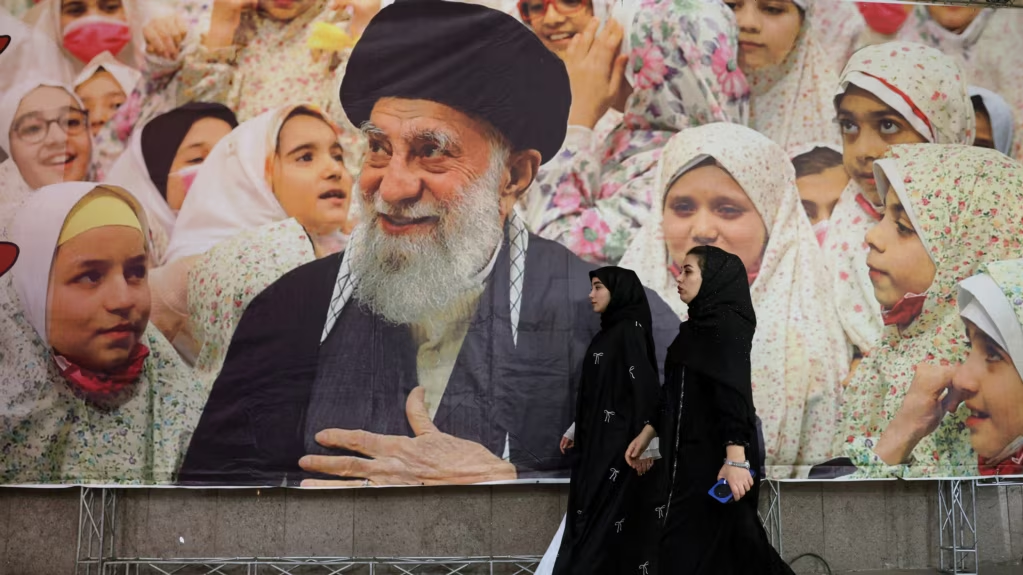
Supreme Leader Ayatollah Ali Khamenei, Iran’s spiritual leader and highest authority who led the country for almost four decades, was killed during US and Israeli air strikes on February 28 at the age of 86.
Praised by his supporters as a wise leader and denounced by his critics as a dictator, Khamenei will be remembered as a monumental figure of the Islamic Revolution who rode a reputation for piety and fierce devotion to the cause to his ascendancy as supreme leader.
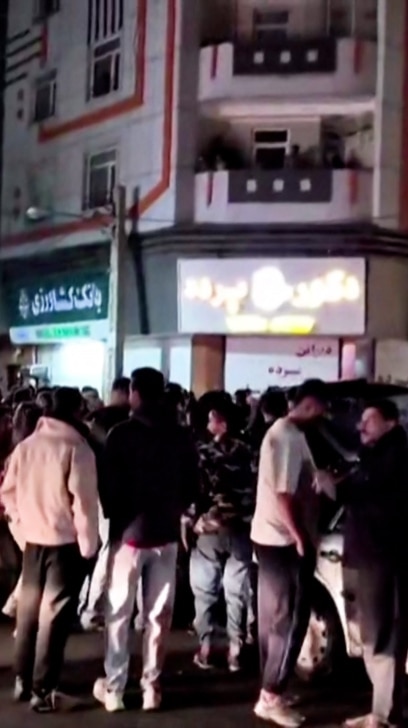
Celebrations In Iran After Trump Says Ayatollah Killed In Strikes
by RFE/RL
The code has been copied to your clipboard.
width pxheight px
The URL has been copied to your clipboard
- Auto
- 240p
- 360p
- 480p
- 1080p
- 720p
No media source currently available
0:001:030:00
Khamenei’s use of force against his own people, jailing of opposition figures within the establishment itself, and fiery resistance to outside influence — particularly that of the United States and Israel — forged his legacy as a harsh and uncompromising authoritarian who led his country into international isolation.
“History will show Khamenei’s reign was deeply traumatic for the Iranian people who watched their country isolated and weakened to the point where a majority came to see emigration as their only hope,” said Alex Vatanka, director of the Iran Program at the Middle East Institute in Washington.
The latter years of Khamenei’s rule were marred by frequent nationwide antiestablishment protests and deadly state crackdowns that killed thousands of demonstrators.
Iran’s 40-Day Mourning Ceremonies Spark Renewed Protests
The protests over the high cost of living in 2017, gasoline prices in 2019, water shortages in 2021, and the death in custody of Mahsa Amini, a young woman who allegedly violated the hijab law in 2022, reflected rising anti-regime sentiment in Iran.
But the deadliest protests against the Islamic republic came at the end of December 2025 and ran into early January 2026. The unrest was brutally suppressed, with rights groups confirming more than 7,000 deaths but warning that the real toll was likely much higher. Some estimates run as four times more than the confirmed total.
Khamenei never took responsibility for the rising dissent against his rule and instead blamed antiestablishment protests on foreign actors who he claimed wanted to weaken the Islamic republic.
Throughout his life, Khamenei showed a unique ability to play two sides.
Those who met him earlier in life remember him as a tall and slender cleric who loved poetry and literature, smoked a pipe, and was interested in talking to young people. That contrasts greatly with the fiery, bearded, anti-American who captured the world’s attention later in life.
Under the watch of the once-open leader, repression thrived, Tehran’s circle of insiders shrunk, and the Islamic republic became increasingly isolated.
For decades he had the ultimate say on virtually all affairs in Iran — from whether women could ride bicycles in public to the course of the nation’s relations with the United States, which he cast as the “Great Satan.”
General Jack Keane Says US-Israeli Operation Aims to Dismantle Iranian Leadership
Khamenei freely wielded his power over key institutions such as the judiciary, state broadcasting, and military. If he needed muscle, he relied on a military security apparatus that included the powerful Islamic Revolutionary Guards Corps (IRGC) and Iran’s feared intelligence services.
“By empowering the IRGC, he militarized the country’s politics and by co-opting the clerical establishment, he delegitimized it,” said Ali Vaez, the director of Iran Project at the International Crisis Group.
Born in Mashhad in 1939, Khamenei was the second son of a clerical father. He began his religious education early in life, was inspired in his early teens by fiery revolutionary Sayyid Navvab Safavi, and studied in the holy city of Qom under the future founder of the Islamic republic, Ayatollah Ruhollah Khomeini.
Embed share
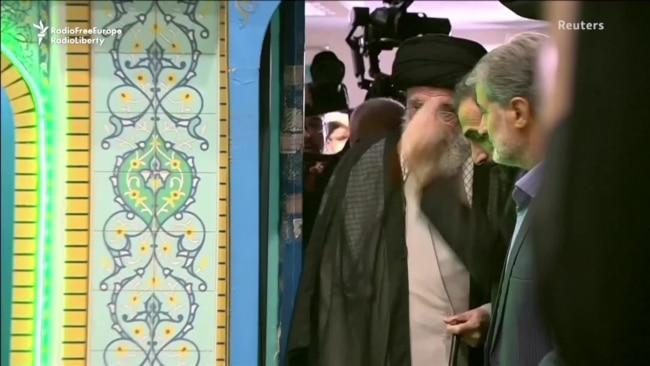
Ali Khamenei, Iran’s Hard-Line Authoritarian Supreme Leader, Dead At 86
by RFE/RL
Embed share
The code has been copied to your clipboard.
width pxheight px
The URL has been copied to your clipboard
- Auto
- 240p
- 360p
- 480p
- 720p
- 1080p
No media source currently available
0:004:530:00
From Activist To Reviled Leader
Khamenei gained a reputation for being a humble and pious religious scholar, and in 1962 joined Khomeini’s revolutionary movement, which opposed the shah and Tehran’s pro-American policies. His revolutionary activism attracted the authorities’ attention, leading to the first of many arrests and imprisonments.
In 1964, the 25-year-old Khamenei decided to leave Qom to care for his father — a “good deed” that he later said was blessed by God and credited for his later success.
In Mashhad, Khamenei gave lessons on the Koran and Islamic ideology, leading to imprisonments, torture, and eventually internal exile. When the revolution occurred in 1979, he was named to the Islamic Revolutionary Council by his former teacher, Khomeini.