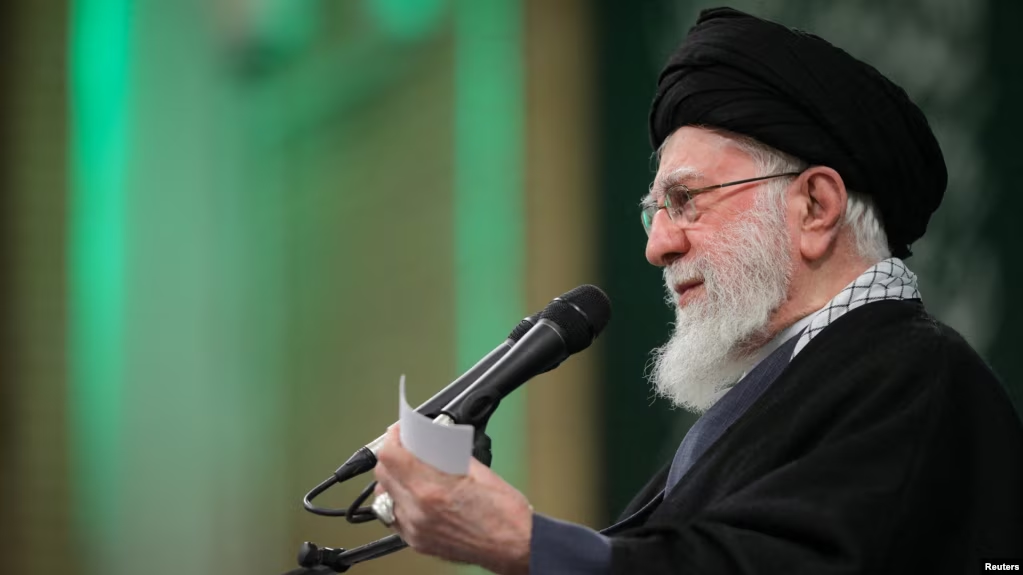
Iran’s clerical rulers resorted to unprecedented brute force to put down weekslong antiestablishment protests that posed the biggest threat to their rule in decades.
Even though the clerical establishment appears to have survived the latest round of mass protests, many observers say its days are numbered.
US President Donald Trump, who has threatened military action against Iran over the deadly crackdown on protesters, has called for new leadership in the Islamic republic.
RFE/RL interviewed Alex Vatanka, director of the Iran Program at the Middle East Institute in Washington, about possible US action against Tehran and the likelihood of change in Iran.
RFE/RL: For the first time in nearly four decades, it feels like things might finally change in Iran. It increasingly looks like a make-or-break moment. Protests have happened before. How is this one different?
Alex Vatanka: Obviously, Iran has experienced a number of protests in the last decade, and even before. What has happened during the last decade is the frequency of the protests. They happen more often, and they have become more radical. Ten years ago, protesters would ask for policy change, and they would chant slogans about how miserable life is.
Today, they are shouting for the toppling of the regime. They are shouting for the death of the dictator, by which they mean Supreme Leader [Ayatollah] Ali Khamenei. Previously, they would be in the streets and maybe burn some garbage cans in the city of Tehran. Now what we are seeing is attacks on mosques. Some of the protesters have been willing to fight the security forces. We have seen thousands of people killed. The fact is this is on a different scale, and each time we have seen the trend continue, the protesters are becoming angrier. Their demands are more fundamental. They want fundamental change, and the security forces are acting more ruthlessly.
Behnam Ben Taleblu: Iran’s Mass Protests Are A ‘Social Revolution’ Against Clerical Rulers
The external context matters here because the regime genuinely seems to believe that even if these protesters are homegrown, external powers are going to try to exploit the moment for their benefit. They accuse the United States and Israel of somehow being involved. That just makes this cocktail much more dangerous than what we have seen in previous rounds of protests.
RFE/RL: Speaking of external powers, let’s talk about possible US intervention. Based on Trump’s initial tweets — “help is on its way” — it seemed likely. But now the threat appears to have petered out. So how likely is it, and have the Iranian authorities at least received a reprieve?
Vatanka: President Trump does not seem to have a clear strategy in mind. He stepped in and talked about being on the side of the protesters when the protests were gaining momentum. For a moment, it looked like the regime was on the brink. But as soon as the protests died down, the president backtracked, saying they are not killing people and they are not executing people.